Our Tips For Curating The Perfect Living Room
When it comes to the different spaces in a home, each has its own role: the kitchen is the heart, the bathroom is a sanctuary, and the living room is the social hub. It’s where people gather - whether unwinding on the couch after a long day, family movie nights, or hosting friends and holiday gatherings. The living room is where memories are made, which is why thoughtful, functional design matters.
In all of our design and furnishing living room projects, we do so with this in mind. From layout and furniture selection to overall design details, we aim to create spaces that are cozy, family-friendly, and reflective of our clients’ lifestyles, all while maintaining an elevated, refined aesthetic.
A few months ago, our blog How to Design a Functional Kitchen shared tips for transforming a kitchen into a space that’s as beautiful as it is functional. After that, we shared How to Design a Functional Primary Bathroom. This month, we’re turning our attention to the living room, sharing tips on how to curate a perfect space that is both stylish and livable.

Tiffany Ringwald Photography

Tiffany Ringwald Photography
Tiffany Ringwald Photography
Anchor The Room With A Rug
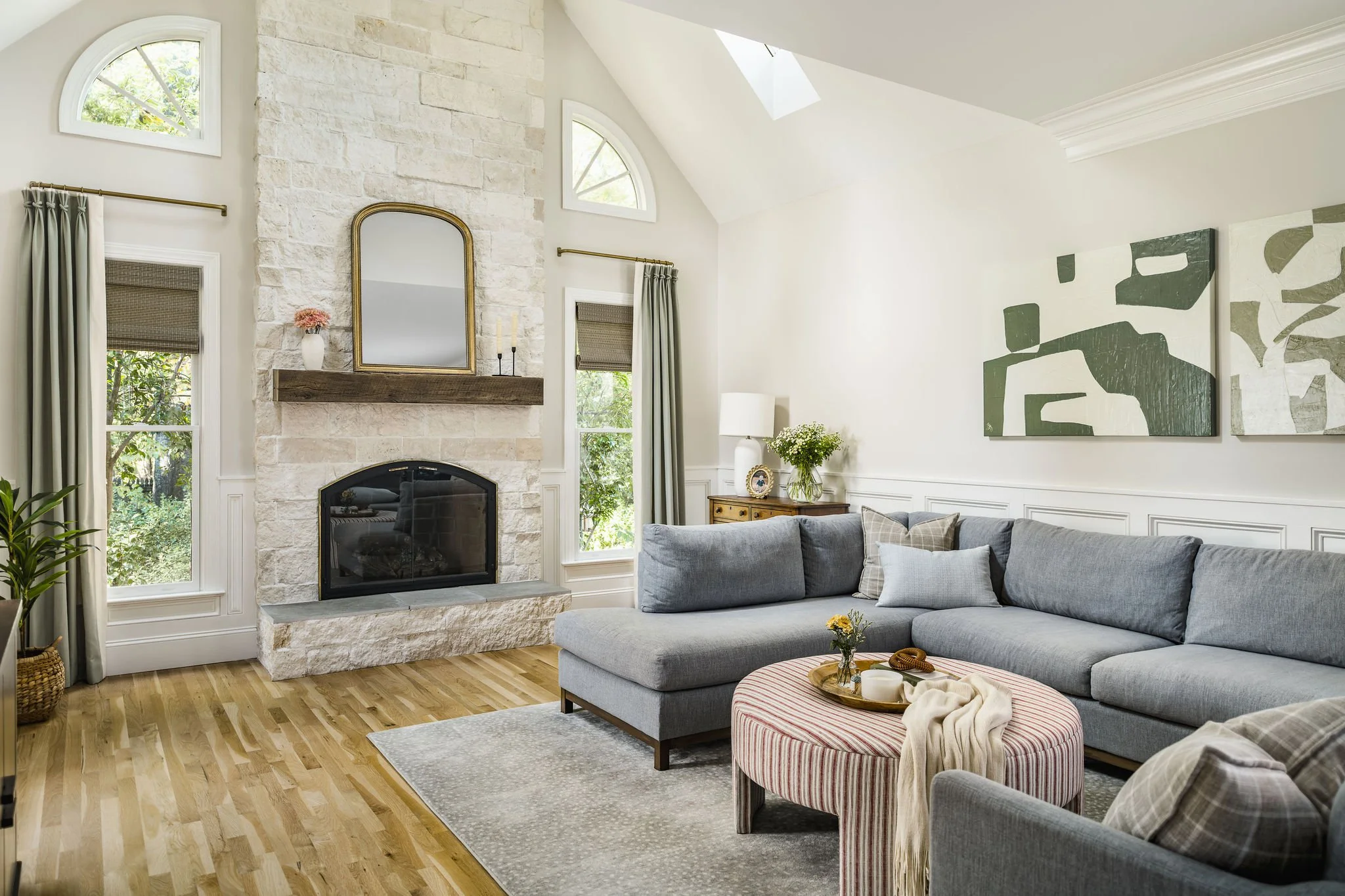
Let’s start with the foundation of the space: the rug. The right size rug defines the seating area and visually anchors the room. Positioning the front legs of all furniture on the rug helps the pieces feel connected rather than floating independently, creating a cohesive, intentional layout — as seen in our Life On Longview project. In larger spaces, you may even be able to place all of the furniture legs on the rug, like we did in both our Made In Montibello and Bulaful Home projects. Rugs are also a great way to subtly separate the living area from dining or kitchen zones in open‑concept spaces.
When choosing a rug, consider material, texture, pattern, and color carefully. For homes with kids or pets, durable, easy‑to‑clean options are essential. For a natural, stain‑resistant fiber, we love wool. Polypropylene is a great synthetic option at a lower price point and comes in a wide range of colors and patterns. We typically select rugs with texture and pattern to add visual interest, and to help disguise the things you’d prefer to keep hidden. You’ll also want to think about pile height (how fluffy it is!). Low‑pile or flat‑weave rugs are ideal for high‑traffic areas because they’re practical, easy to maintain, and of course, stylish.

Tiffany Ringwald Photography
Flow And Comfort
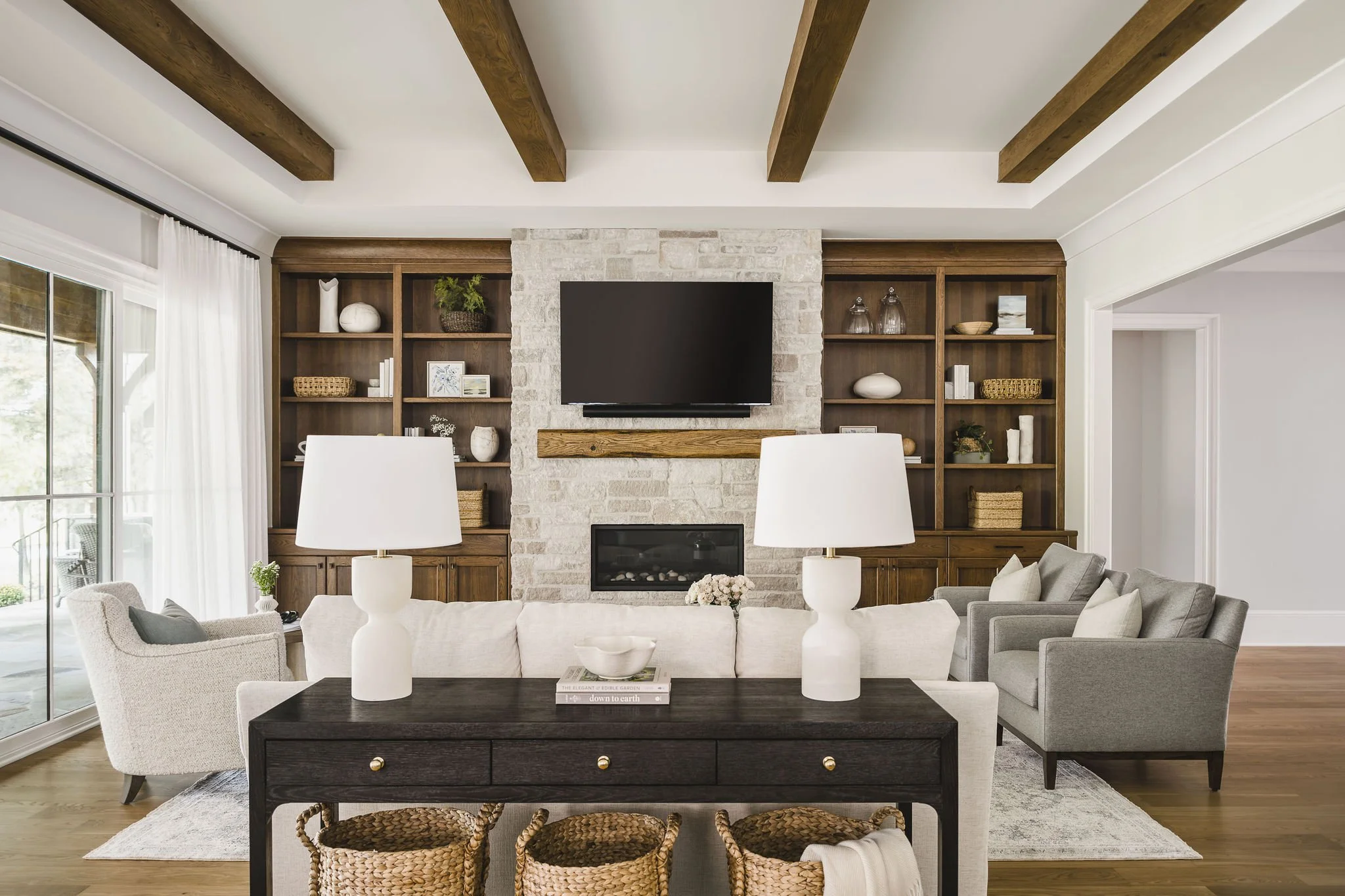
Flow and comfort are essential in living room design - and it’s not just about having a cozy, plush sofa, though that’s certainly important. How furniture is arranged can make all the difference in how the space feels and functions. Keep a coffee table or ottoman at least 15” from the sofa as this provides room to walk around while still keeping it close enough to kick back and relax.
Another simple but impactful tip is to ensure that every seat has a convenient place to set down a drink, book, or remote. Whether it’s an end table, coffee table, or ottoman, having accessible surfaces makes a big difference when it comes to function. You can see this in our Dansing On Providence project.
Tiffany Ringwald Photography

Tiffany Ringwald Photography

Tiffany Ringwald Photography
Layered Lighting
What makes a living room feel warm and inviting? Layered lighting! We like to combine three types: natural light from windows, table and floor lamps, and overhead lighting on dimmers. Together, they create the perfect balance of brightness and ambiance.
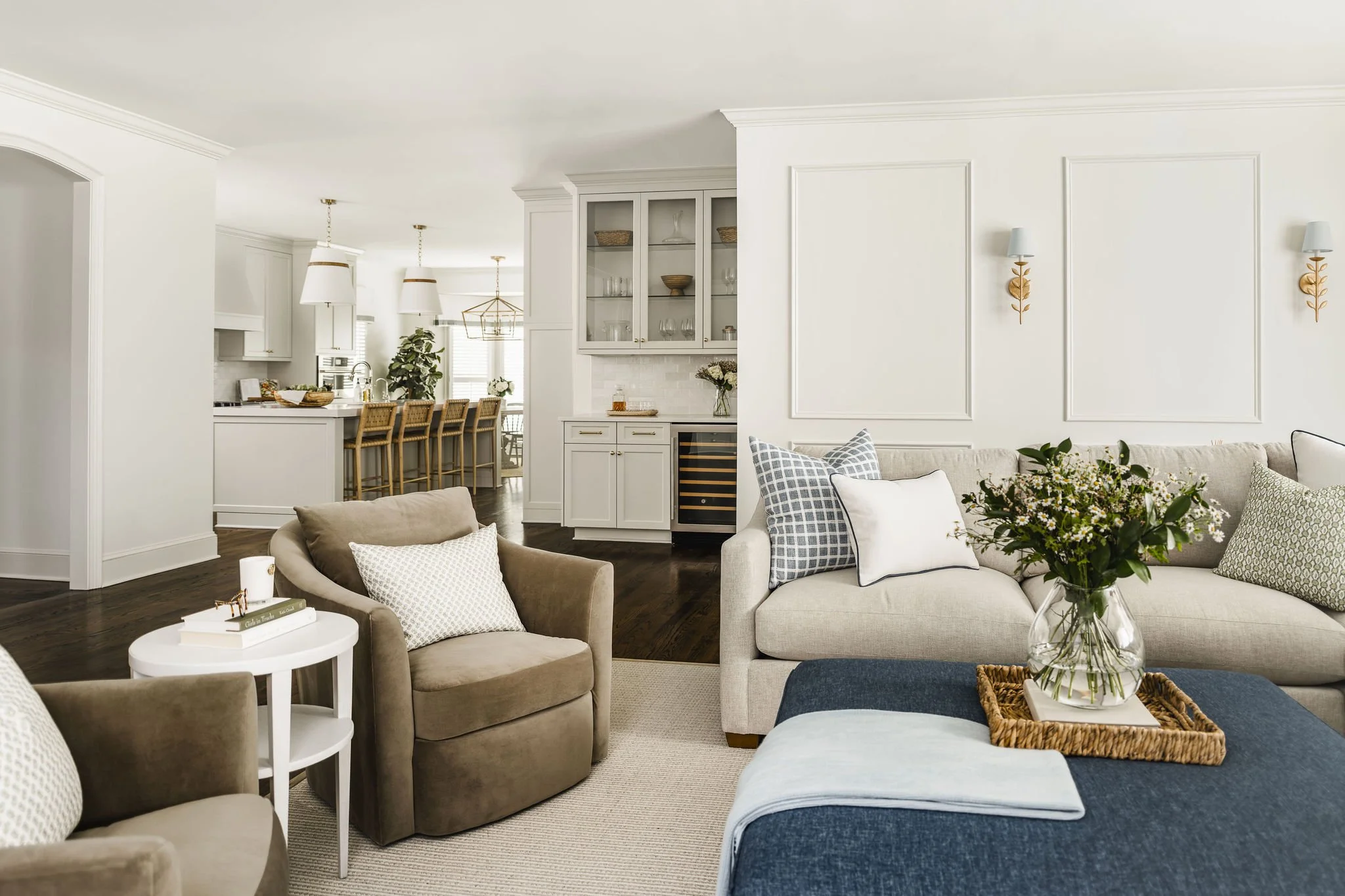
Table lamps are both functional and decorative. In our projects, like Life On Longview and Asheford Green, we use them to create cozy seating zones, add visual balance and symmetry, and infuse the space with personality. Wall sconces are another excellent option for layering light, as we highlighted in the Made In Montibello living room.
Tiffany Ringwald Photography

Tiffany Ringwald Photography

Tiffany Ringwald Photography
Colors, Textures & Patterns
One of the easiest ways to bring personality into a living room is through color, texture, and pattern. These elements not only express your style, they add depth and dimension, ensuring the space never feels flat. Start with a cohesive color palette to unify the room, then layer in variety through different materials and finishes. For example, in our Made in Montibello living room, we began with a textured wool rug, added a neutral sofa and velvet accent chairs, then introduced patterned throw pillows, a bold navy upholstered ottoman, green drapery, and side tables in mixed finishes. Together, these pieces create a collected, cohesive look rather than a matching set you’d find in a retail showroom.
Patterns, whether subtle geometrics, florals, or stripes, can appear in rugs, pillows, or window treatments to add visual interest without overwhelming the room. The key is balance: keep larger pieces in neutral or coordinating tones, and let textures and patterns shine as accents that reflect your personality.
Our Made In Montibello, Bulaful Home and Dansing On Providence projects are great examples of how thoughtful use of color, texture, and pattern can bring a living room to life.

Tiffany Ringwald Photography

Tiffany Ringwald Photography

Tiffany Ringwald Photography
Prioritize Functionality and Durability
Functionality is a priority in the spaces we design. Choosing materials and fabrics that stand up to the realities of family life, whether you have kids, pets, or love to host, is essential. Not all materials are created equal when it comes to durability. For upholstery, we look for fabrics with high double‑rub counts, meaning they can withstand frequent use without showing wear. Pairing these with solid wood frames ensures strength and longevity, so your furniture can handle years of family gatherings, movie nights, and everyday living.
We also love mixing in softer or more delicate materials, like linen, in spots that see less traffic— think window treatments and lamp shades. This allows you to enjoy texture and style without sacrificing practicality.
Just as we always recommend sealing your stone countertops, we also suggest treating your fabrics with an eco‑friendly stain resister. Some textiles come pre‑treated, and for those that don’t, you can have them sprayed right at home. Not that we’ve tested the theory, but treated fabrics tend to hold up even against the toughest culprits — including a generous glass of Cabernet. ;)